
National Diabetes Week: What Your Eyes Can Reveal About Your Health
Diabetes affects hundreds of thousands of Australians, yet many people are surprised to learn that one of the first places it can leave lasting signs is inside the eye. Long before blurred vision appears, subtle changes can develop. Changes an optometrist can detect during a comprehensive eye examination.
It’s a powerful reminder that your eyes don’t just help you see. They help reveal how your body is functioning. Here’s what Diabetes Australia states:
“Diabetes is the epidemic of the 21st century and the biggest challenge confronting Australia’s health system. There are currently almost 1.5 million Australians (about 5.5% of the population) living with all types of diabetes (known and registered on the National Diabetes Services Scheme (NDSS)), and up to 500,000 people living with silent, undiagnosed type 2 diabetes.” [About diabetes | Diabetes Australia]
National Diabetes Week: A Whole Body Perspective
Every July, National Diabetes Week (12th – 18th) encourages Australians to learn more about living well with diabetes and reducing long‑term complications. One area often overlooked until symptoms appear is eye health. Understanding how diabetes affects the eyes can help people protect their vision long before problems arise.
Why the Eye Is So Closely Linked to Diabetes
The connection begins with the structure of the eye itself.
- The retina is one of the most delicate and active tissues in the body.
- The tiny blood vessels inside the eye are among the smallest anywhere in the body.
Because these vessels are so fine, they are often among the first to be affected by long‑term elevated blood glucose. High glucose can weaken vessel walls, cause leakage, and trigger swelling, all of which interfere with how the retina processes light.
This explains why optometrists can detect early changes before a person notices any difference in their vision. It’s not just interesting; it’s clinically important.
The Amazing Eye
Your Eyes Are the Only Place Doctors Can See Blood Vessels Without Surgery
Most organs hide their blood vessels beneath layers of tissue. Your retina is different.
During a comprehensive eye examination, an optometrist can directly observe the tiny blood vessels at the back of your eye. These vessels offer valuable clues about your eye health and may also reflect broader changes occurring elsewhere in the body.
It’s one of the few places in medicine where blood vessels can be examined naturally and non‑invasively. A remarkable advantage in monitoring diabetes!
How Diabetes Affects Vision — A Simple Progression
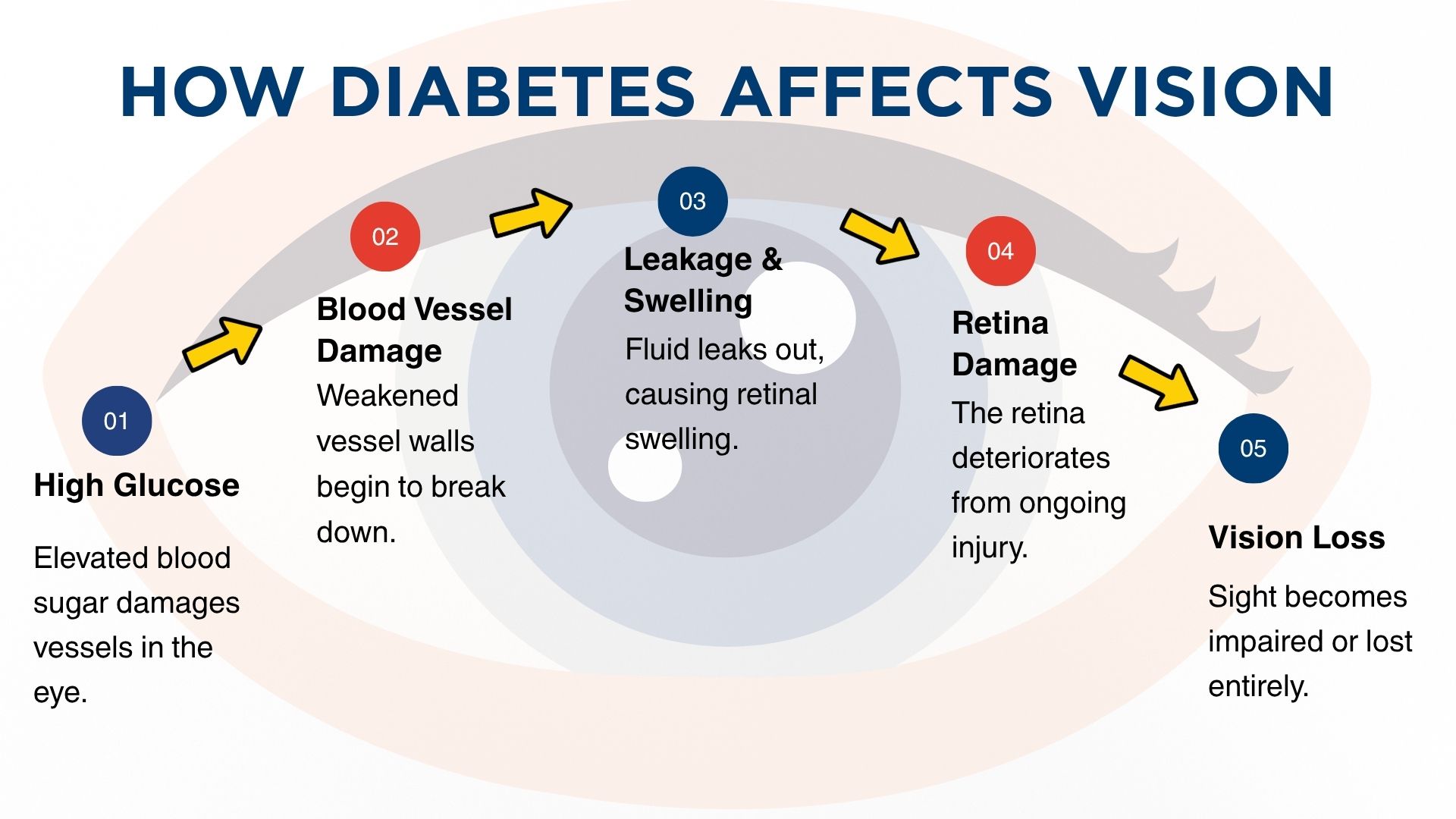
This progression often begins quietly, which is why early detection matters.
Before Symptoms Appear
Many people assume: No blurry vision = healthy eyes.
But diabetic eye disease often develops silently. You may feel fine and see clearly while early changes are already occurring. Regular diabetic eye examinations help ensure these changes are caught early, when treatment is most effective.
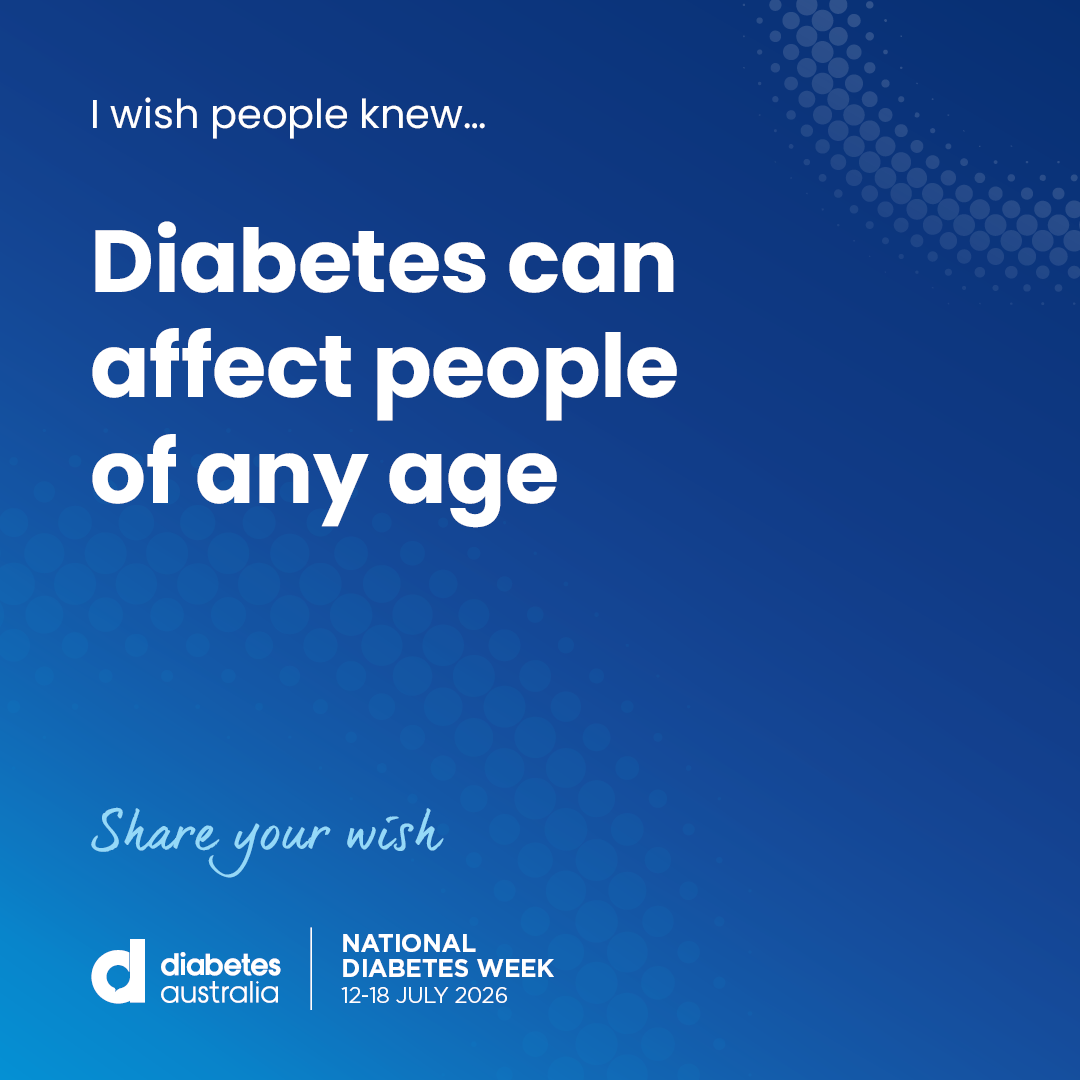
Different Life Stages, Different Needs
Newly Diagnosed Diabetes
A comprehensive eye examination soon after diagnosis helps establish a baseline.
Long Term Diabetes
Annual retinal examinations, stable glucose levels, and consistent medication use all support long‑term vision.
Supporting Someone with Diabetes
Encouraging regular appointments can make a meaningful difference.
Healthy Eyes Start with Healthy Habits
Leafy greens — lutein protects retinal tissue
Fish — omega‑3 supports tear film
Citrus — vitamin C strengthens blood vessels
Whole grains — support glucose stability
Practical Tips
✓ Monitor glucose
✓ Attend diabetic eye examinations
✓ Stay active
✓ Eat colourful foods
✓ Don’t smoke
✓ Wear sunglasses
✓ Stay hydrated
✓ Reduce alcohol consumption
Protecting Your Sight
National Diabetes Week isn’t just about managing diabetes. It’s about protecting every part of your health, including your vision.
If you’re living with diabetes, or supporting someone who is, consider booking a bulk billed comprehensive eye examination* with an independent tenant optometrist at Optical Superstore. Regular care today helps protect long‑term sight.
*Most eye tests are bulk billed to Medicare.